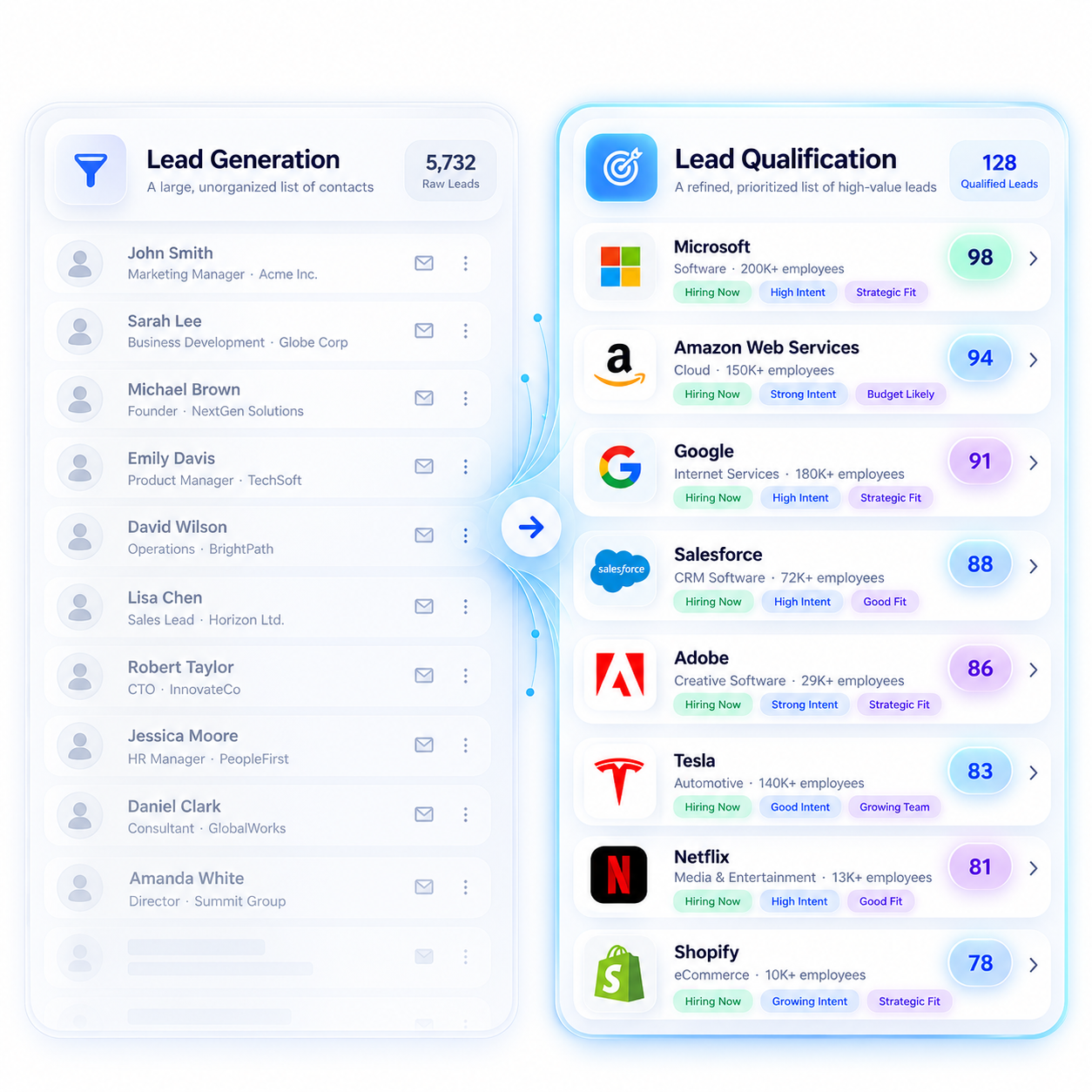
Lead Generation Finds Contacts. Lead Qualification Tells You Who Matters.
AI Lead Qualification Inputs
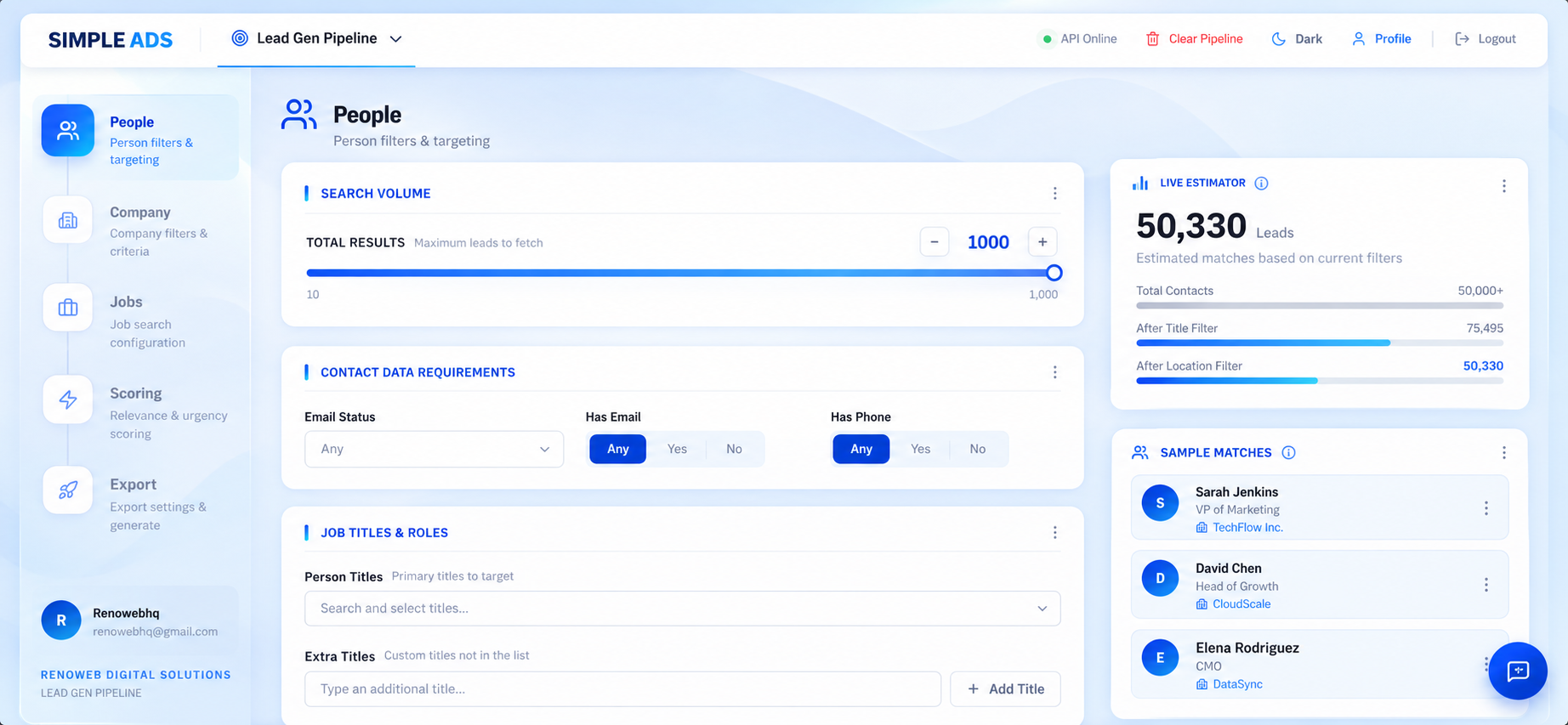
Sample Matches & Filter Breakdown
Lead Generation ≠ Lead Qualification
Lead generation answers: “Who can I potentially contact?”
Lead qualification answers: “Which of those contacts are actually worth my attention?”
These are different jobs. A prospect can match your job-title criteria and still be a poor opportunity. For example, a person may have the right title, work in the right industry, and be in the right location… but the company may have no obvious relevant need, the timing may be weak, or the person may not be relevant to the buying decision.
SimpLeads adds a qualification layer after discovery so your team has more context before deciding where to spend outreach time.
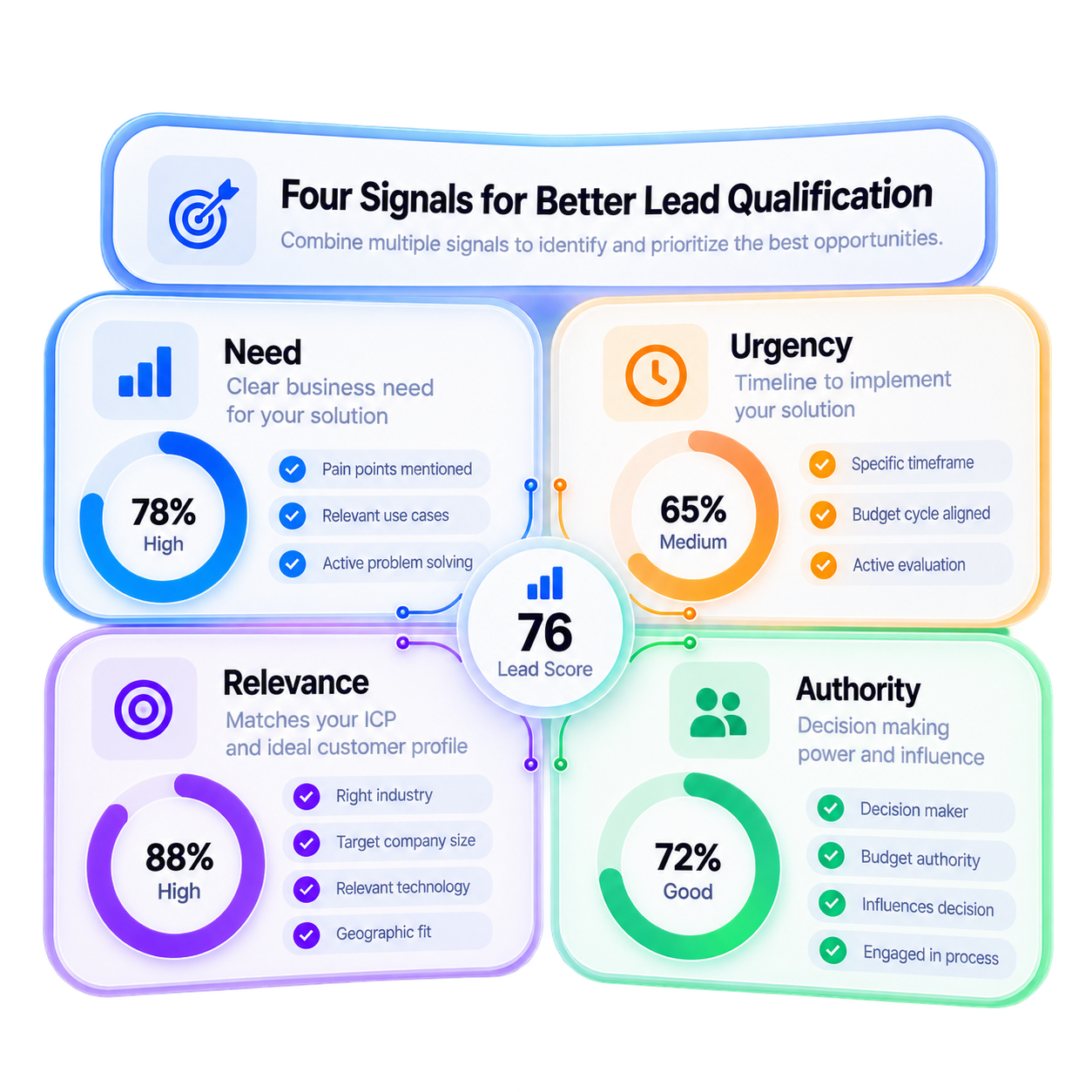
Four Signals for Better Lead Qualification
Our qualification framework focuses on four core dimensions:
- NeedDoes the available information suggest a relevant business need? SimpLeads uses your company context to identify evidence.
- UrgencyIs there a reason the opportunity may matter now? (e.g. Active Job Signals indicating expansion).
- RelevanceDoes the prospect actually fit your target? Evaluates how closely the lead matches your requirements.
- AuthorityIs this person relevant to the decision-making process based on role and seniority?
Tell SimpLeads What You Sell
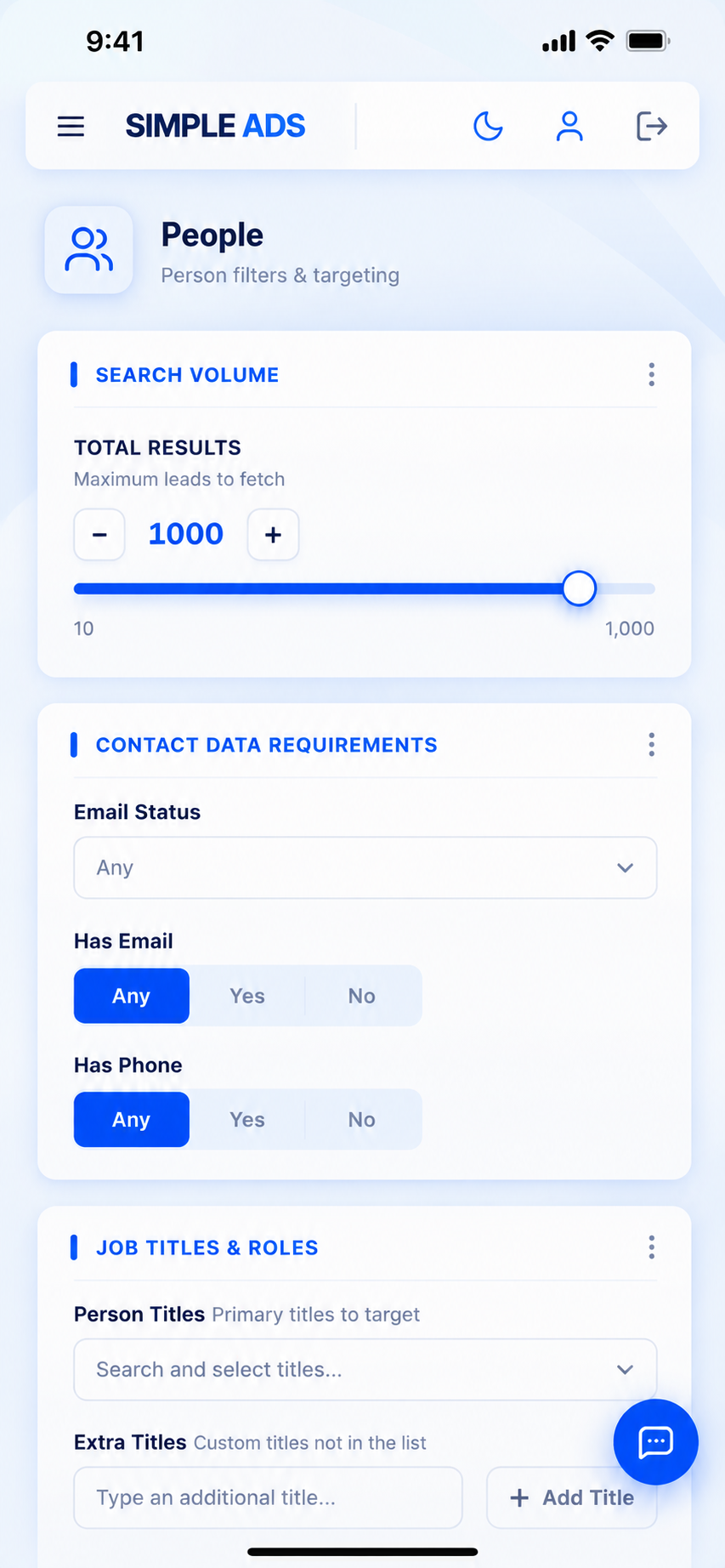
AI qualification needs context. The Scoring workflow allows you to provide a Company Description so the system understands what your business does and what makes a prospect relevant to you.
Then define your Target Roles to specify the roles you want to sell to or engage. The available role-selection workflow helps compare lead roles against your target designations.
This means qualification is not based on a generic definition of a “good lead.” It is based on the relationship between: Your business + Your target roles + Available prospect/company info

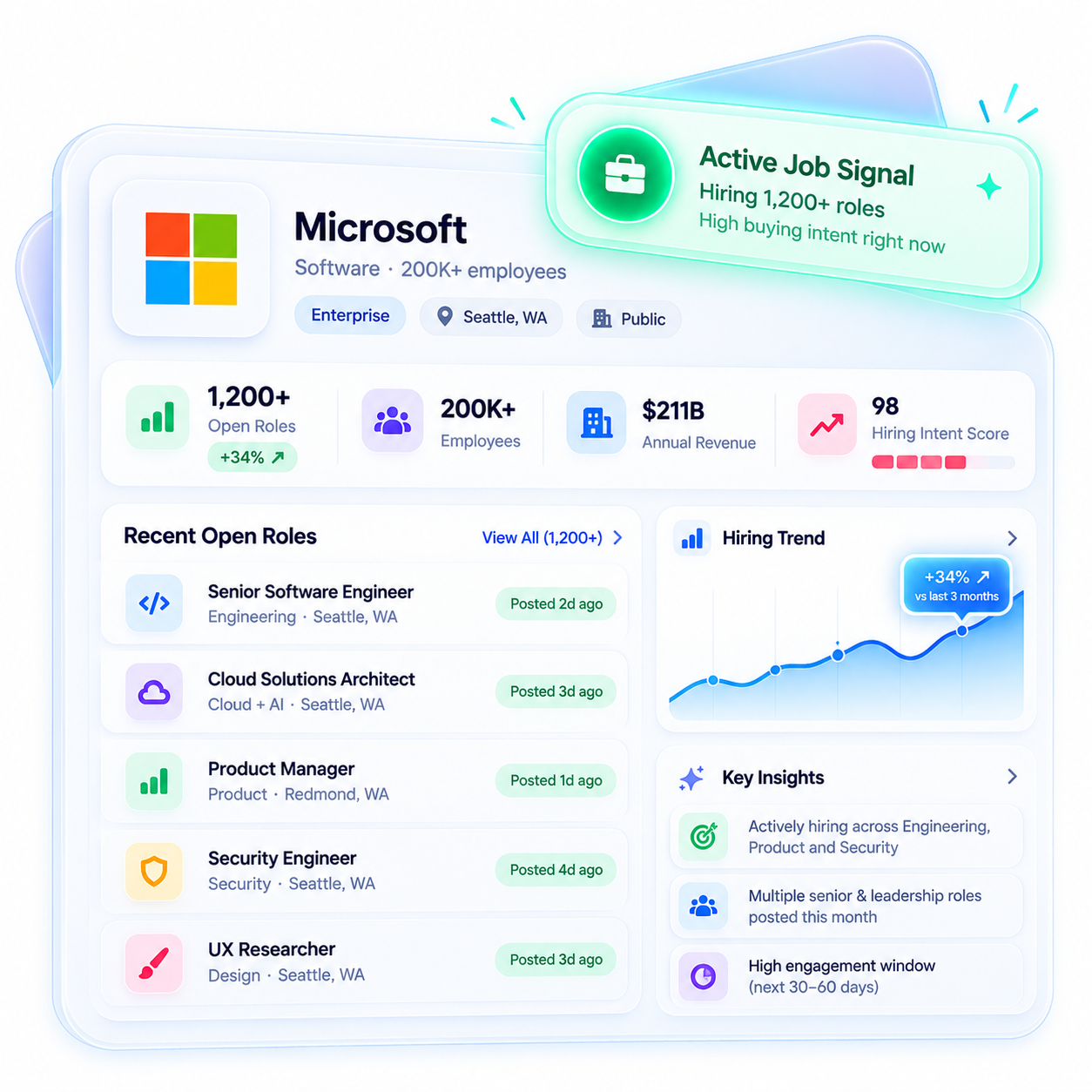
Active Job Signals Add Timing Context
Job activity can provide another input into qualification. A recent relevant job opening may indicate expansion, a new initiative, or increased operational requirements.
But Active Job Signals are not proof of buying intent. SimpLeads treats them as one additional signal.
Example: A company matching your ICP has a relevant industry, a target decision-maker, and recent relevant job activity. That combination may deserve more attention than an otherwise similar company with no comparable signal.
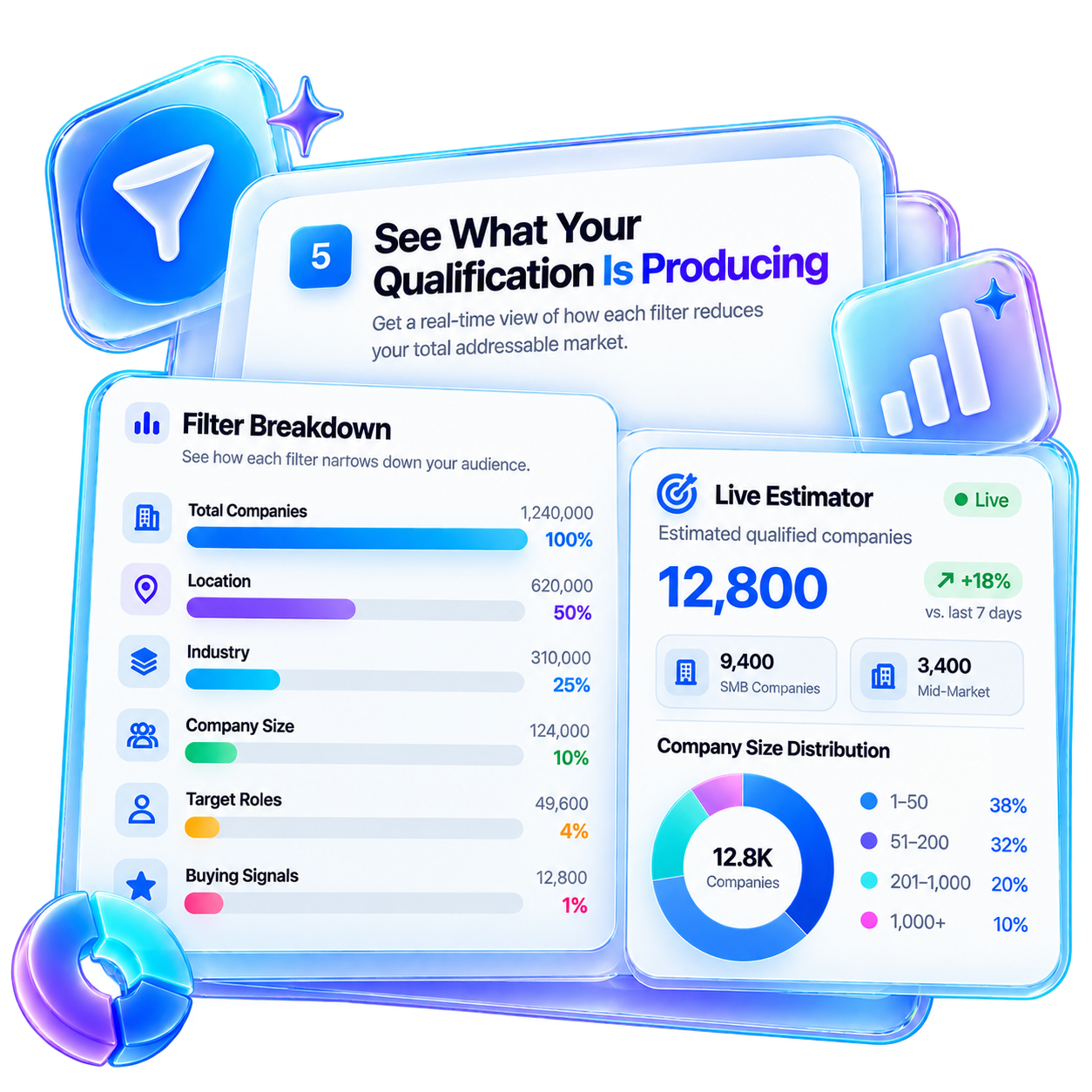
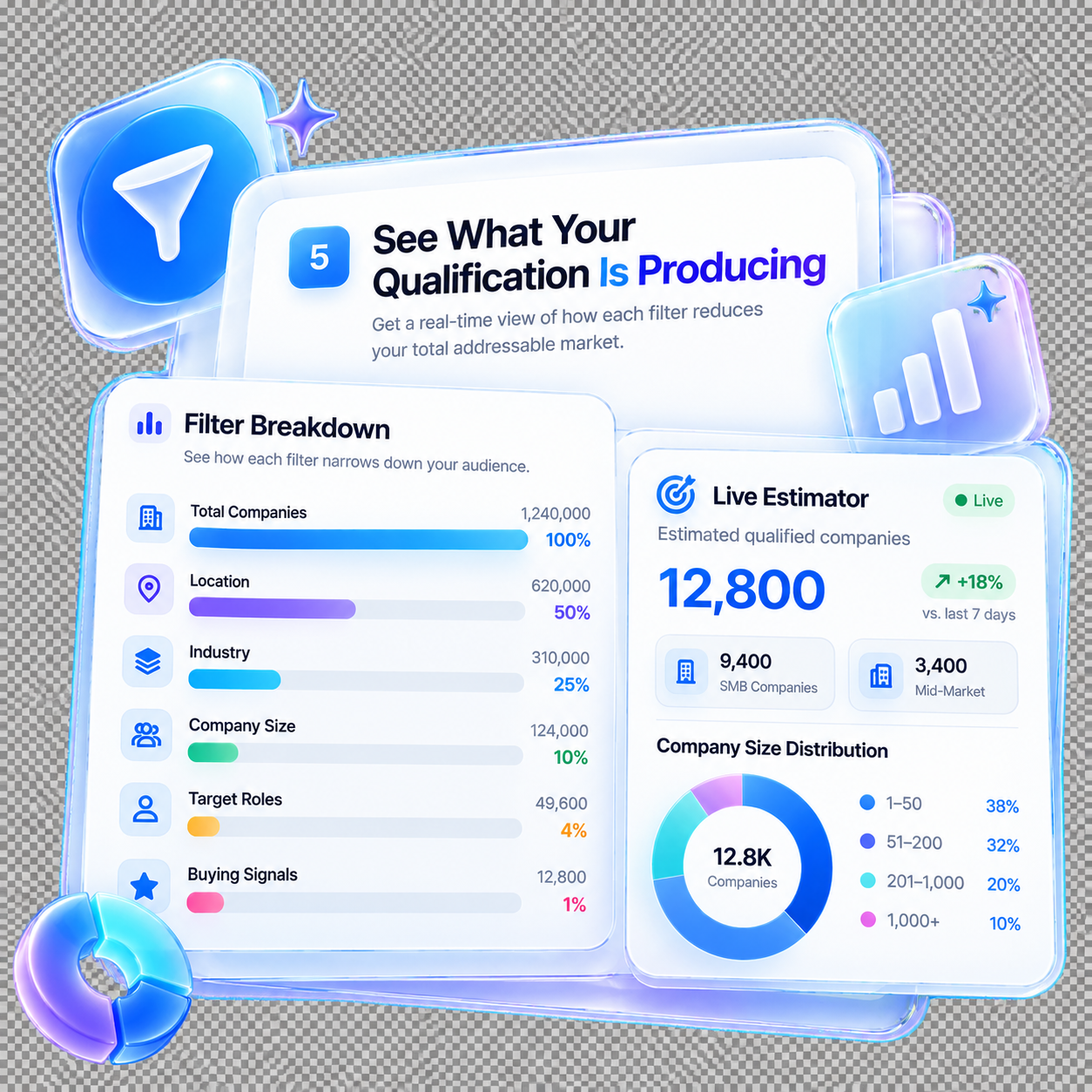
See What Your Qualification Is Producing
SimpLeads provides product-level visibility into the resulting search and scoring workflow.
- Sample MatchesReview representative matches before committing to a larger export. See Name, Job title, Company.
- Live EstimatorUnderstand how your filters affect the available result set as you refine your search.
- Filter BreakdownReview the composition of your resulting list by available categories such as industry.
Qualification Is Designed to Support Decisions, Not Replace Them
AI qualification should make prospecting easier, not create false certainty. SimpLeads should therefore be positioned as decision support.
A high score does not guarantee: A purchase, a meeting, a response, budget availability, buying intent, or conversion.
Likewise, a lower-scored lead is not necessarily worthless. The score helps your team prioritize where to investigate and act first.
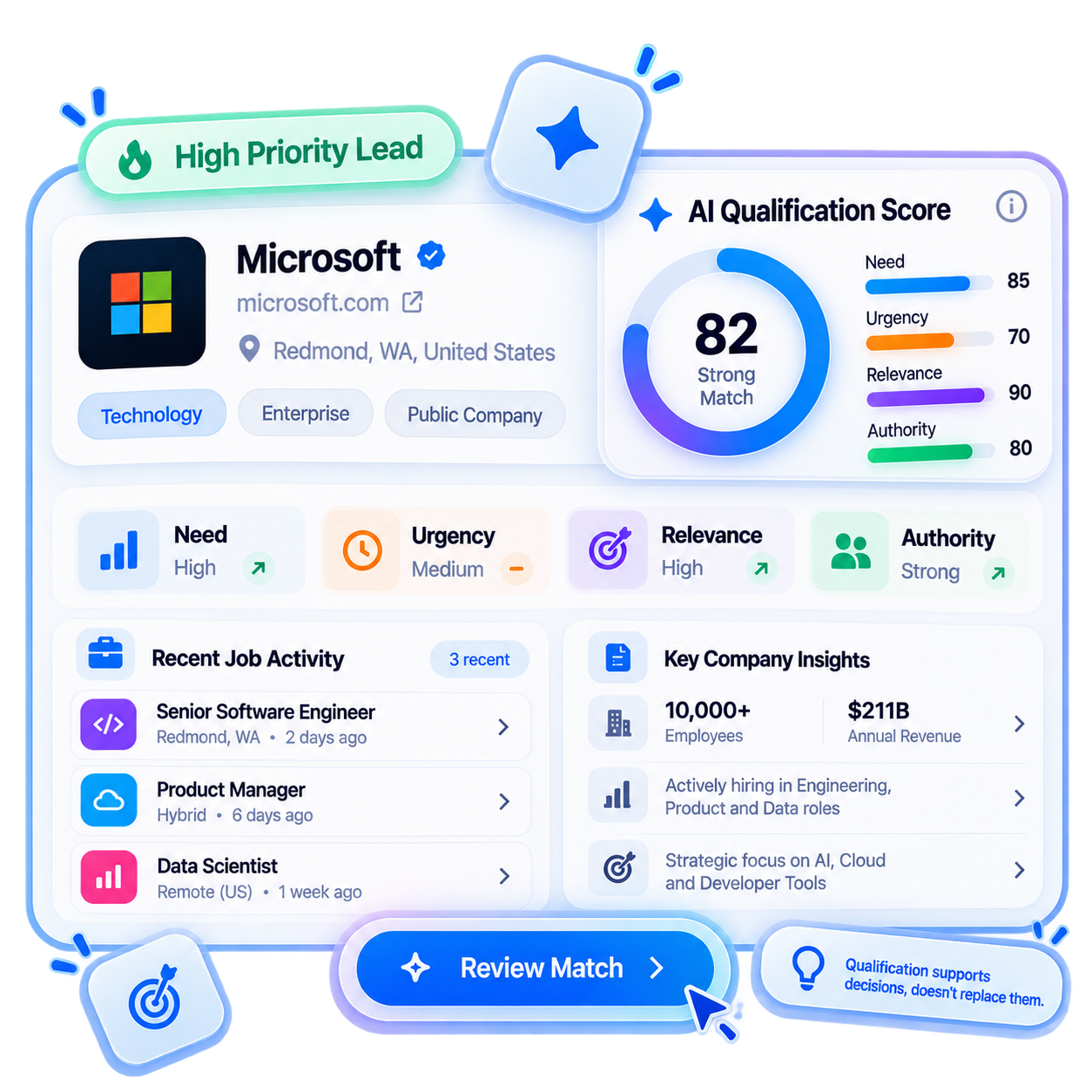
Scoring Turns Qualification Into Priority
Qualification tells you what characteristics matter. Scoring helps you determine which leads should come first. Instead of receiving a flat list, the goal is to give your team a more useful priority order.
Moving Toward BANT-Ready Qualification
SimpLeads is being developed toward broader BANT-style qualification. The current qualification framework focuses on Need, Urgency, Relevance, and Authority. Budget / financial qualification is currently in development.
From "More Leads" to "Better Priorities"
A traditional lead-generation workflow often looks like: Search → Export → Spreadsheet → Manual Research → Decide
SimpLeads aims to shorten that process: Search → Understand → Signal → Qualify → Prioritize → Export
Stop Asking How Many Leads You Have.
Start Asking Which Ones Matter.